B.C. Court of Appeal Affirms UNDRIP as Legally Binding, Calls Mineral Claims System Inconsistent
In a significant decision for Indigenous rights and resource governance, the British Columbia Court of Appeal has ruled that the province’s current mineral claims system is inconsistent with the United Nations Declaration on the Rights of Indigenous Peoples (UNDRIP). The ruling strengthens earlier court findings and further clarifies the legal weight of UNDRIP within B.C.’s legislative framework.
A Turning Point for Mineral Rights in B.C.
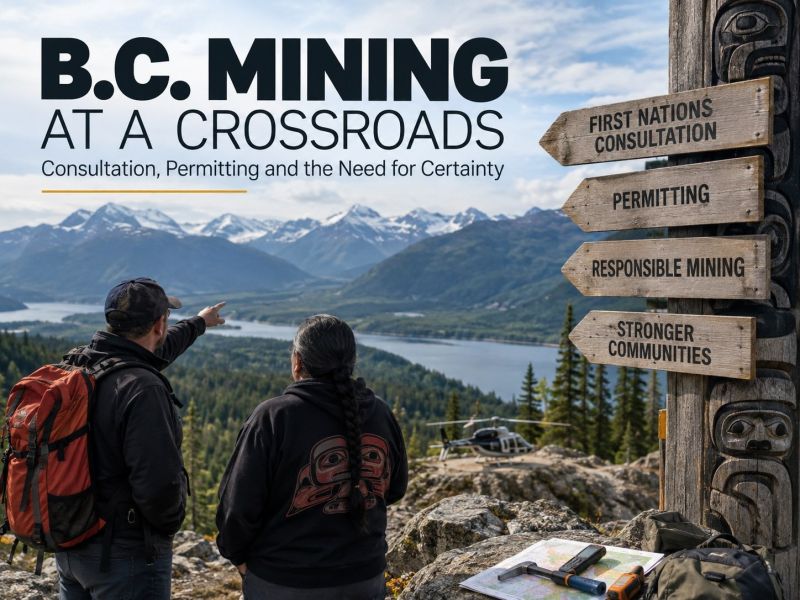
Under B.C.’s present “free entry” mineral staking system, individuals and companies can register mineral claims online without consulting First Nations whose traditional territories overlap the proposed exploration areas. This system has been challenged for years by Indigenous communities who argue that it disregards their rights, title, and authority over their land.
The Court of Appeal agreed, declaring that the lack of required consultation violates principles found in UNDRIP—particularly the right to free, prior, and informed consent (FPIC). B.C. adopted UNDRIP into law in 2019 through the Declaration on the Rights of Indigenous Peoples Act (DRIPA), committing the province to align its laws with the declaration.
What the Decision Means
The ruling does not immediately halt mineral staking, but it puts enormous pressure on the province to reform the system. The court’s decision signals that:
- UNDRIP is not symbolic—it has real legal force when applied through provincial legislation.
- The free-entry mineral system must change, likely moving toward a model that requires mandatory early-stage consultation with First Nations.
- Future resource projects may face new requirements to ensure Indigenous rights are respected from the outset.
Implications for Industry and Indigenous Nations
Indigenous leaders have welcomed the decision as a validation of long-standing concerns about unilateral resource development. The ruling also signals a possible shift toward co-management of lands, shared decision-making, and more transparent processes around exploration.
Mining and exploration companies, meanwhile, will need to adjust to a future where consultation becomes standard at the claim-staking stage rather than later in the permitting process. Many industry experts believe clearer rules could reduce future conflict and legal uncertainty.
A Step Toward Reconciliation in Resource Development
While challenges remain, the Court of Appeal’s decision marks a major moment in redefining how resource extraction proceeds in British Columbia. By affirming UNDRIP as legally binding in the context of mineral claims, the court has reinforced the province’s responsibility to update its laws and ensure Indigenous rights are meaningfully upheld.